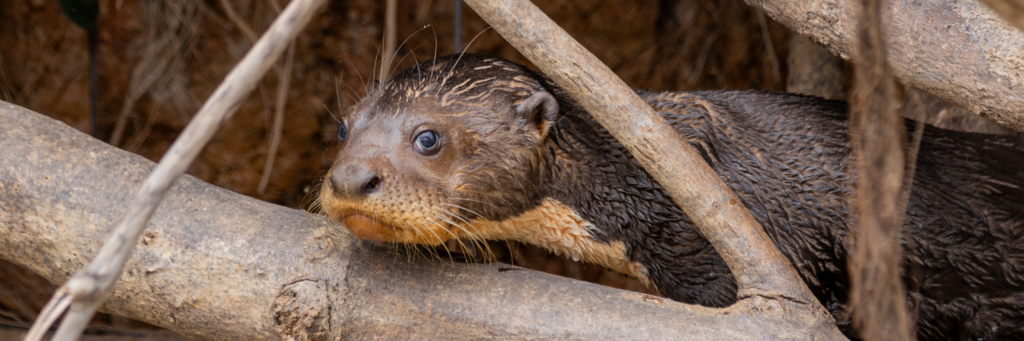
A new classification by the Ministry of the Environment recognizes the increasing risks faced by the species, and its status has changed from Vulnerable to Endangered (EN) on the Official National List of Threatened Species of Fauna. The change was established by MMA Ordinance No. 1,704, dated June 16, 2026, and published in the Diário Oficial da União on June 17.
The new category represents a higher level of threat and is related to the projected reduction in the species’ occurrence and the combination of different pressures affecting its populations.
Broad distribution, but under pressure: main threats to the giant otter
The giant otter has a wide historical distribution across South America, ranging from Argentina and southern Brazil to northern Venezuela. However, it currently occurs in only 60% of this range, and in Brazil, the species can still be found in the Amazon, the Pantanal, and a small portion of the Cerrado. The species is considered extinct in the Pampa and Atlantic Forest.
The giant otter depends on rivers, lakes, wetlands, and their surrounding banks for survival. Therefore, protecting these environments is essential for maintaining its populations. Among the main factors threatening the species are:
Habitat loss and degradation: urban expansion, hydroelectric dams, mining, and agriculture;
Changes in rivers and the hydrological cycle: changes in water regimes and degradation of riverbanks;
Reduced food availability: mainly due to overfishing;
Aquatic pollution: mercury, pesticides, and other pollutants;
Illegal hunting and conflicts: killings associated with conflicts involving fishers and fish farmers;
Disease: potential transmission from domestic animals;
Poorly planned tourism: disturbance of groups in visitation areas;
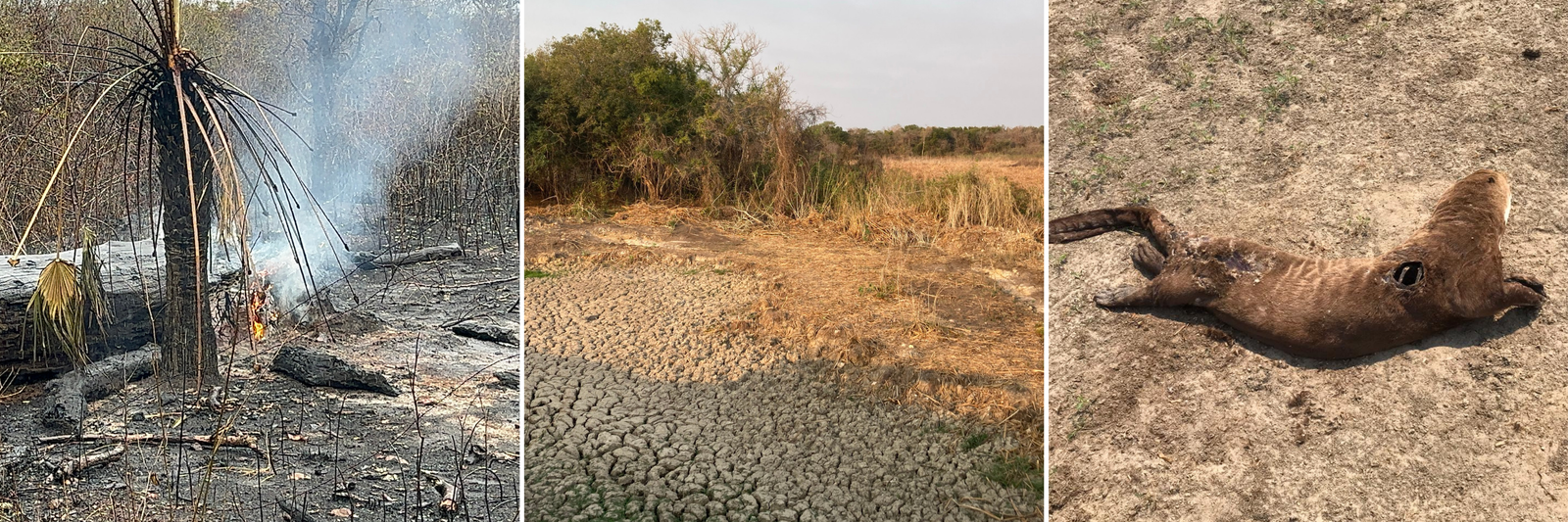
Fires and extreme climate events: prolonged droughts, wildfires, and the climate crisis.
Historically, hunting for the fur trade was one of the main threats to the giant otter, pushing populations to the brink of extinction. Habitat degradation and the damming of rivers also contributed to this scenario.
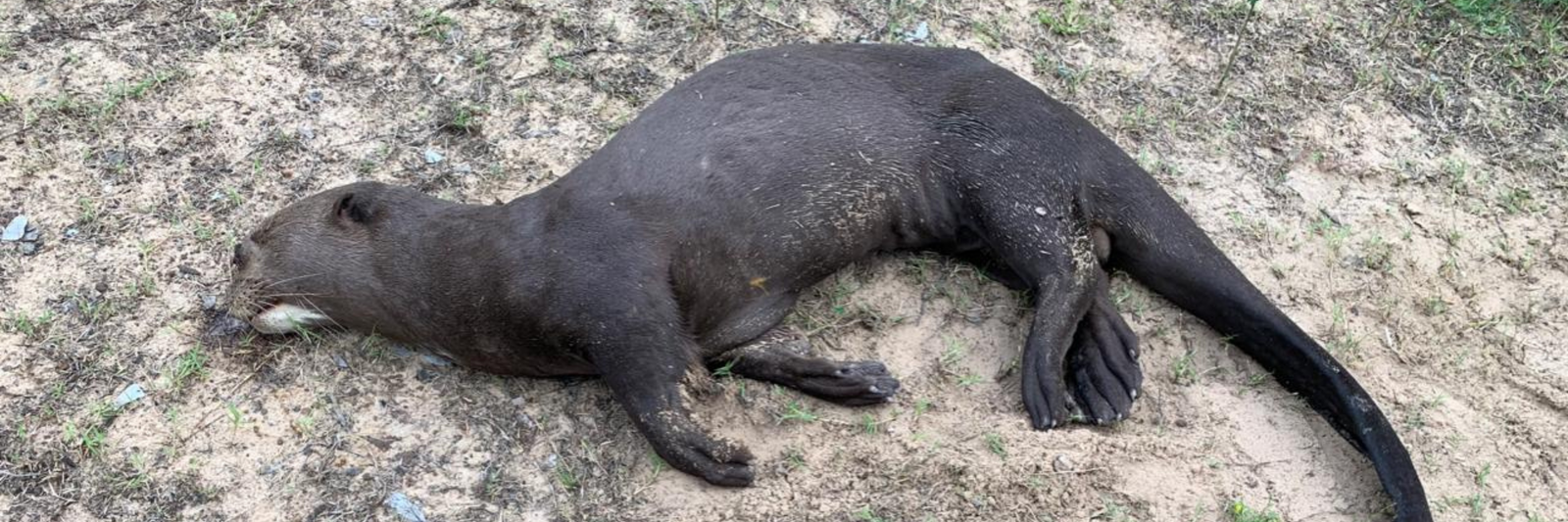
Currently, the combination of these pressures could lead to a decline of more than 75% in the species’ populations between 2012 and 2035, a period equivalent to three generations.
What does “Endangered” mean?
The Endangered (EN) category indicates that the giant otter faces a high risk of extinction in the wild. The change from Vulnerable (VU) to Endangered does not mean that all populations are disappearing, but rather that the available evidence points to a significant increase in the species’ risk of extinction in Brazil, highlighting the need to strengthen research, monitoring, and conservation efforts.
What has Giant Otter Project been doing?
The Giant Otter Project, established in 2019 as a result of nearly two decades of research and conservation efforts in the Brazilian Pantanal, integrates scientific research, population monitoring, sustainable tourism development, environmental education, and science communication to promote the protection of the species and its habitat.
Long-term monitoring makes it possible to track individuals and groups, recording births, deaths, group composition, and population responses to environmental changes. The Project conducts systematic monitoring efforts primarily in the Pantanal, while also working in the Amazon, Cerrado, and Paraná Basin. These data help identify threats and guide conservation strategies.

The change in the giant otter’s conservation status is a warning about the future of the species and its habitats, highlighting the urgent need to expand research, reduce human impacts, and strengthen conservation efforts.
LEARN MORE: MMA Ordinance