Tourism season and pup season: a period that requires attention in the Pantanal
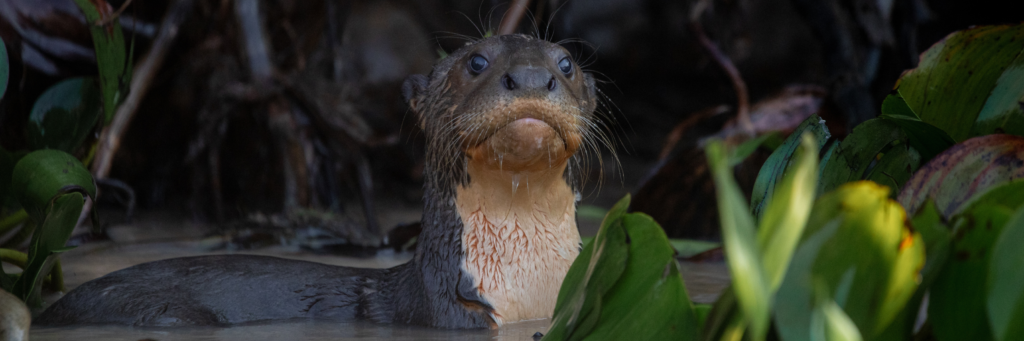
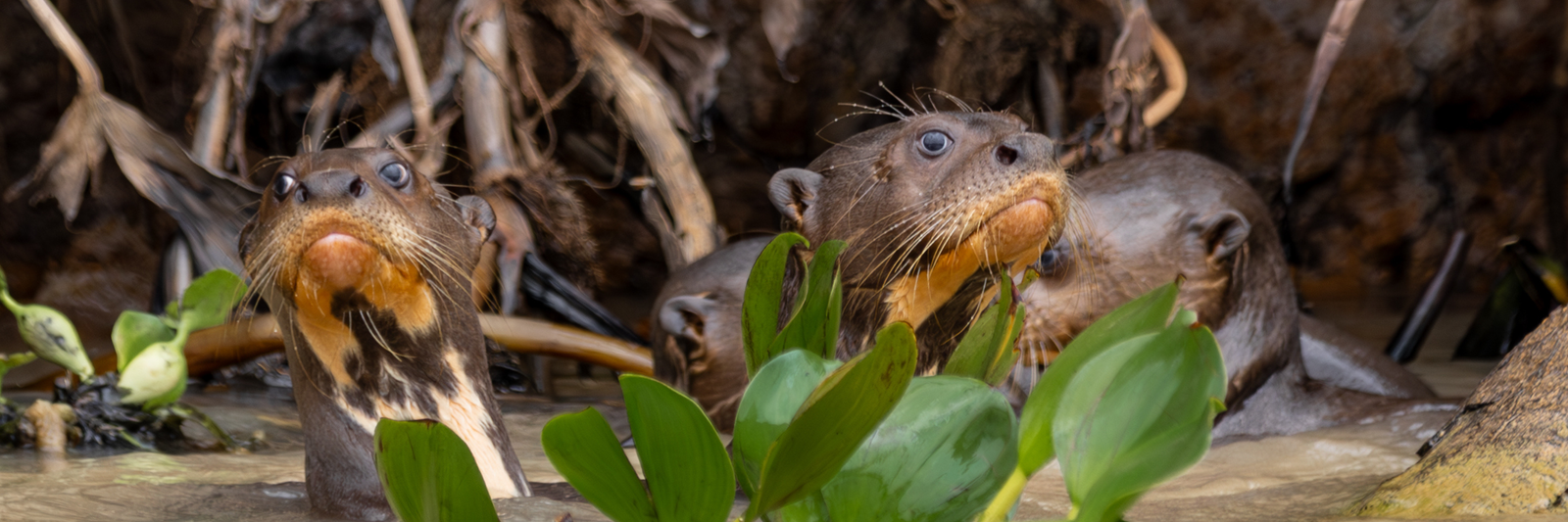
The species’ breeding season occurs between June and September, when new cubs are born. During their first months of life, cubs pups are still learning how to swim and depend on adults and the protection of the group, making this a particularly sensitive period for giant otters.
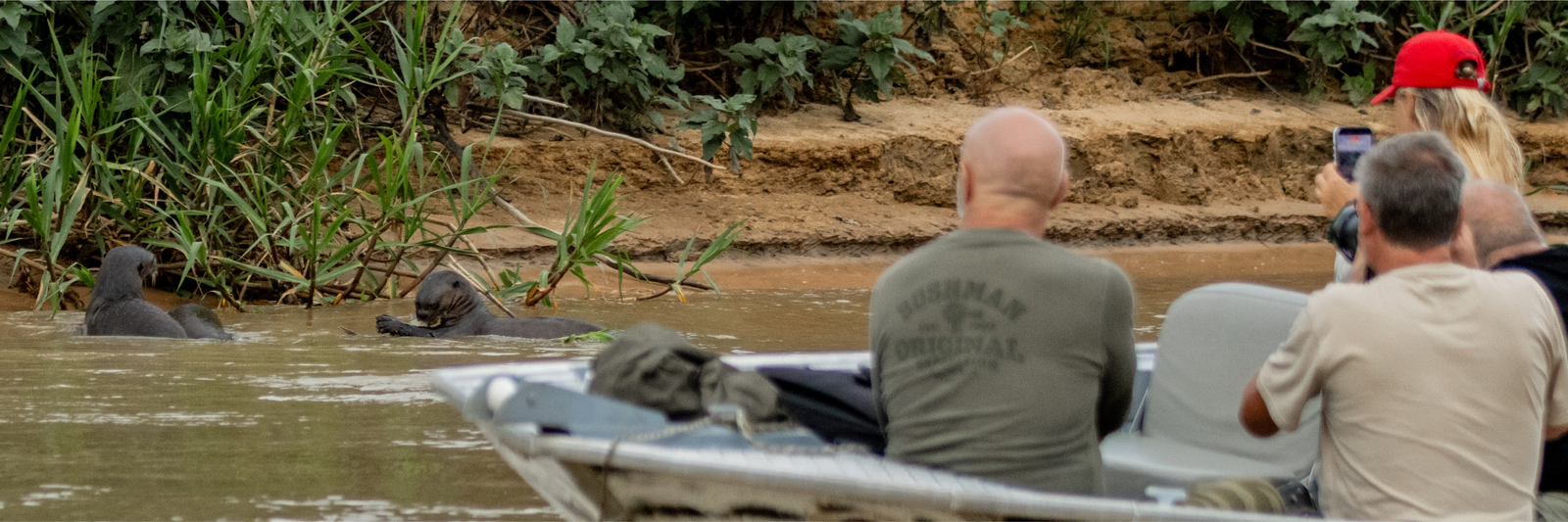
At the same time, the dry season in the Pantanal provides favorable conditions for wildlife observation and attracts tourists to areas where giant otters live. The overlap between these two periods makes the adoption of responsible tourism practices even more important, allowing visitors to observe the animals without interfering with their natural behavior or the safety of the cubs.
How to observe without causing impacts
The presence of boats can create waves (when operated at high speeds), noise, and excessive approaches, which can be particularly harmful to groups with cubs. To reduce impacts during wildlife observation, follow these guidelines:
✅ Reduce boat speed in areas where giant otters occur, avoiding the creation of waves near groups;
✅ Keep a safe distance and allow the animals enough space to move freely;
✅ Do not feed or attempt to attract the attention of giant otters by shouting, whistling, or making other sounds. Approaches can cause stress, alter the group’s behavior and lead to accidents;
✅ Do not chase the animals to get better photos or recordings;
✅ Do not step or climb on dens or latrines, which are important sites for giant otter reproduction and resting;
✅ Respect signs of discomfort and move away if the group shows behavioral changes in response to the boat.
Responsible tourism is also conservation
Observing giant otters provides unique experiences and contributes to valuing the species and the environments where they live. To make this possible, it is important for tourists, boat operators, and local communities to work together to ensure that human presence does not compromise the safety and well-being of the species. Observing wildlife respectfully is also a way of protecting the next generation of giant otters!