Pantanal at Risk: Understanding the Impacts of the Paraguay-Paraná Waterway

The proposed concession of the Paraguay-Paraná Waterway has raised concern among researchers, traditional communities, and environmental organizations working in the Pantanal. The project aims to expand navigation along approximately 590 km of the Paraguay River, between Corumbá and Porto Murtinho, with a focus on increasing cargo transport, especially iron ore.

Although presented as a logistical alternative, the initiative raises important concerns about potential interventions in the riverbed, such as dredging and rock blasting, which could profoundly alter the natural dynamics of the Pantanal’s hydrological system.

The Paraguay River and the Pantanal Flood Pulse

The Paraguay River plays a central role in the ecological functioning of the Pantanal, as it retains and distributes the waters that flood the vast wetland during the rainy season. Any alteration to its course may directly impact the so-called “flood pulse,” a natural process that regulates life in the biome.

This cycle of floods and droughts is essential for maintaining biodiversity, influencing everything from nutrient availability to the reproduction of multiple species. Changes to this regime may compromise the ecological balance of the entire Pantanal.

Impacts on Wildlife: The Case of Giant Otters

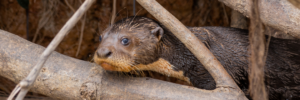
Giant otters are highly dependent on healthy, well-structured river systems. These environments provide food, shelter, and suitable areas for reproduction and social organization.

Changes in the hydrological regime, fish availability, or riverbank structure may directly affect the survival of giant otters. As apex predators in aquatic food webs, they also serve as important indicators of the health of Pantanal freshwater ecosystems.

Impacts on Pantanal Communities

The potential effects of the waterway are not limited to biodiversity. Pantanal communities may also be directly affected, as they depend on natural resources for activities such as fishing, wildlife tourism, and traditional livelihoods.

A reduction in flooded areas and a possible decline in fish stocks may compromise food security, local economies, and the way of life of these populations.

Public Debate and Participation of the Giant Otter Project

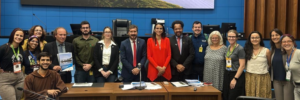
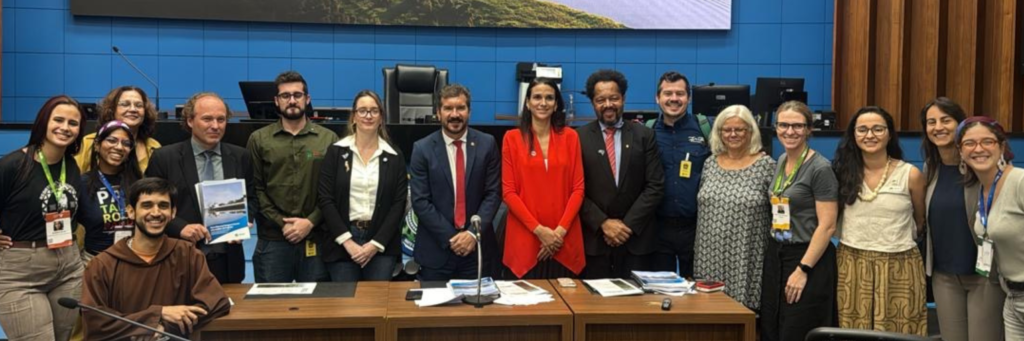
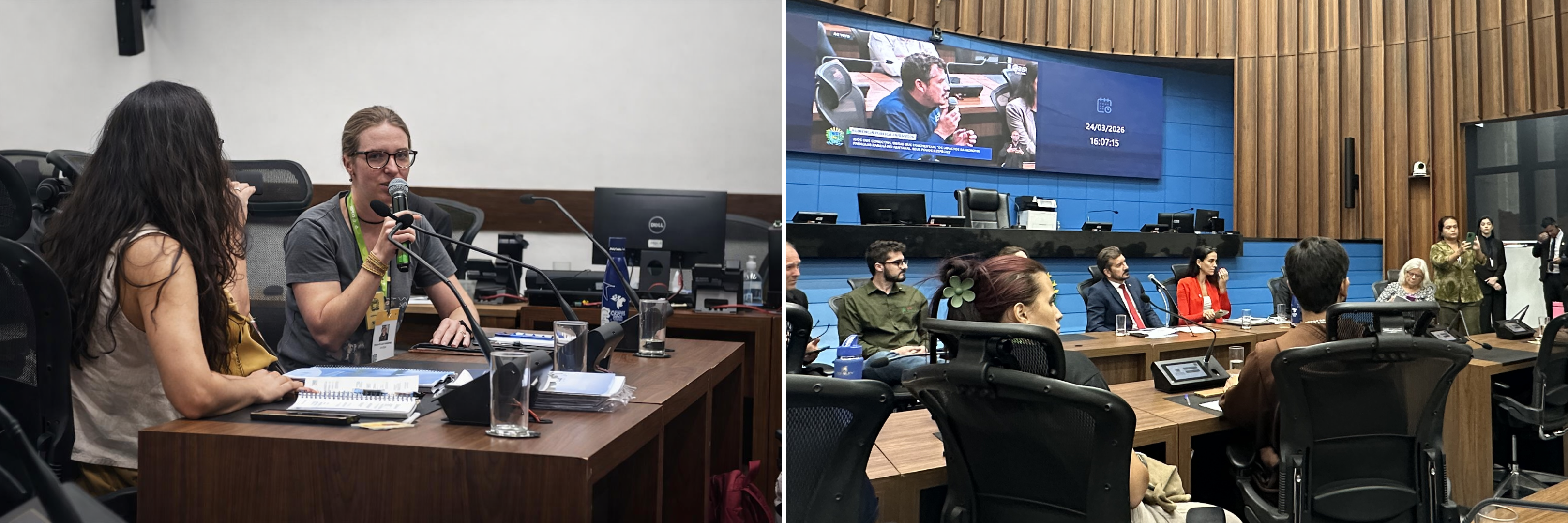
In March, a public hearing held at the Legislative Assembly of Mato Grosso do Sul, titled “Rivers that Connect, Projects that Fragment: the impacts of the Paraguay-Paraná Waterway on the Pantanal, its people and species,” brought together researchers, authorities, and civil society representatives to discuss the project’s potential impacts.

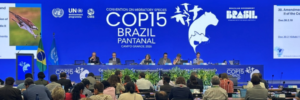
The Giant Otter Project participated in the meeting, discussing the importance of considering the waterway’s effects on giant otter populations and their habitats, as well as drawing attention to local communities that directly depend on the integrity of the Pantanal.

We will continue to follow and contribute to this debate, advocating for decisions grounded in scientific evidence and committed to protecting the Pantanal, its biodiversity, and its people.
Veja mais Notícias

João Guerreiro – Undergraduate student in Biological Sciences, member of the Giant Otter Project, working on research and conservation of the species in the Pantanal. He is a member of the IUCN Otter Specialist Group (OSG). He has experience in conservation and environmental education, working on the southern coast of Brazil (sea turtles) and in the Northwest region of Rio Grande do Sul (microalgae and stingless bees). His academic trajectory involves ecological interactions, ecology of aquatic environments, conservation of native fauna, environmental engineering, and scientific dissemination.

Mariana Malzoni Furtado – Veterinary, graduated in 2002 from the University of São Paulo, with a doctorate in Science in 2010 from the Experimental Epidemiology Applied to Zoonoses Program at VPS/USP and a post-doctorate in Animal Epidemiology in 2014. She has worked for over 18 years in Wildlife Conservation in different Brazilian biomes such as Pantanal, Amazon, Cerrado and Caatinga, with emphasis on Conservation Medicine, Animal Epidemiology, Infectious Diseases and Interaction between domestic and wild animals. Researcher at Instituto Onça Pintada from 2003 to 2014, she has contributed to research projects in wildlife conservation, acting as a veterinarian and Conservation Medicine manager. She has experience with different methods of capturing wildlife, having anesthetized and managed more than 200 animals of different species, including jaguar, maned wolf, giant otter, ocelot, pampas cat, wild dog, peccary, giant armadillo, among others. Since 2007 she has been collaborating with giant otters’ research projects, performing captures and surgeries for implantation of radio transmitters and health assessment of the species. Always studying, publishing and contributing to the dissemination of Conservation Medicine and the importance of epidemiological wildlife studies.

Abigail Martin – American zoologist. In 2015 Abbie created the Jaguar Identification Project to instigate value to the world’s largest floodplain, the Pantanal. The Jaguar ID Project uses citizen science and camera traps to monitor the ecology and behavior of the jaguar population in the Encontro das Águas State Park and Porto Jofre region in the Northern Pantanal. Over the years watching jaguars along the region’s rivers, Abbie also follows the giant otter groups, contributing with information about the species and monitoring the groups that are focused by the project. Together her experience with the local community and the identification of jaguars has been contributing to the actions of the Giant Otter Project.

Grazielle Soresini – Veterinária, especialista em Clínica Médica e Cirúrgica de Animais Selvagens e mestre em Ciência Animal. Em 2019 Grazi finalizou seu doutorado em Ecologia e Conservação pela UFMS, realizando sua tese sobre genética e saúde de ariranhas. Atuou profissionalmente realizando atendimento veterinário clínico e cirúrgico em aves, répteis e mamíferos silvestres em diversas instituições. Sócia da Clínica Vida Livre – Medicina de Animais Selvagens (Curitiba/PR), primeira clínica veterinária do Brasil especializada em animais selvagens. Desde 2015 vem atuando em atividades de campo e monitoramento de grupos de ariranhas no Pantanal. É membro voluntário do Grupo de Especialistas em Lontras da IUCN (Otter Specialist Group) desde 2016.

Nathalie Foerster – Biologist and currently a PhD student at the Graduate Program in Ecology and Conservation at the Federal University of Mato Grosso do Sul. Nathalie has been developing her PhD thesis on behavioral and bioacoustic ecology of giant otters in the Miranda region of the Pantanal of Mato Grosso do Sul.

Samara Almeida – Biologist and MSc in Biological Sciences. Samara has been working for the past 6 years with giant otters in the state of Tocantins, acting with conservation, monitoring, environmental education, communication and animal behavior. Currently Samara coordinates a research on acoustic communication of giant otters in the Cantão State Park, Tocantins, which is part of her PhD thesis.

Lívia Rodrigues de Almeida – Biologist and Environmental Analyst at the National Center for Research and Conservation of Carnivorous Mammals of ICMBio (ICMBio / CENAP). She began working with the ecology of otters in the state of Rio de Janeiro in 2002. Since 2011, Lívia has been working on the elaboration of conservation strategies for the endangered Brazilian fauna and the evaluation process of Brazilian carnivores extinction risk. She is also a member of the IUCN Otter Specialist Group.

Karen Arine Souza – Ecologist, Naturalist Tourism Guide for 10 years, she started guiding in the Pantanal and then moved to the Mato Grosso State. In 2020 she worked on the “Jaguar ID Project”, collecting data for the jaguars conservation and evaluating the jaguar population in the post-fire period. Karen currently participates in the Giant Otter Project actions envolving traditional communities in the Pantanal and helping to develop and apply good conduct practices in ecotourism aimed at giant otters. Karen is a founding member of the North Pantanal Tourism Association (Aecopan), being the administrative director from 2015 to 2017 and she currently is a member of the board. The AECOPAN aims to conserve the North Pantanal, using ecotourism as a social and environmental development tool, looking to develop a sustainable tourism.

Nicole Duplaix – PhD in Ecology from the University of Paris, France. Nicole has studied otters for 45 years and is now focused on otter research and conservation in Asia and South America. She is the founder and co-chair of the IUCN-SSC otter expert group – the global otter conservation authority. She teaches Conservation Biology and Species Recovery Planning courses at Oregon State University.

Jessika Albuquerque – graduated in Biological Sciences from the Universidade Estadual da Paraíba (UEPB, Campina Grande) and currently training as a Graphic Designer at the Centro de Capacitação Profissional InforQuality. She has experience in internships and volunteering in the areas of communication, with an emphasis on content production and social media management, science communication, environmental perception and education, experimental science teaching, and mammal conservation. At the Ariranhas Project, she works mainly in communication, managing and producing content for social media (Instagram, Threads, Facebook, LinkedIn, YouTube, and website), in addition to collaborating in the monitoring of giant otters in the Pantanal and in environmental awareness and education actions.

Fernando Rodrigo Tortato – PhD in Ecology and Biodiversity Conservation. Fernando is associate researcher at the Panthera Foundation NGO and has been working for over 10 years on projects aimed at jaguar conservation. In his doctorate, he assessed how tourism can represent a tool for jaguar conservation in the Pantanal. In his field activities in the Pantanal the observation of giant otters is very frequent. Fernando is interested in understanding how tourism can affect the behavior and survival of this incredible mustelid. Fernando plays the role of collaborator of the Giant Otter Project, assisting in contacting with local leaders, logistical support and the dissemination of the actions developed by the project.

Letícia Graciano – is illustrator and art educator, graduated in Visual Arts from the State University of Campinas. She researches childhood culture and she has worked in some NGOs in the state of São Paulo, providing artistic experiences for children and teenagers. Currently she is living with rural populations, and she has been engage with conservation projects in Brazil for a while.

George Leandro – Biologist, Sanitarist. George has lived and worked professionally in some states in Brazil. He has experience with Conservation Parks management and with conservation of endangered species. He lived and worked with traditional populations in isolated areas, and he has participated with social projects and has worked in urban and rural areas.

Gabriel Brutti – Founder of Projeto Dispersar, is a biologist, teacher and professional photographer. Graduated in Environmental Technician and Degree in Biological Sciences from the Instituto Federal Farroupilha (IFFar) Santa Rosa-RS campus, he worked as a scholarship holder and volunteer in research projects with birds in a set of extension projects focused on environmental education. He is currently a postgraduate student in Biodiversity and Conservation at the IFFar campus Panambi -RS and a member of the Giant Otter Project.

Gabriela Duarte – Master in Biology from the University of São Paulo (USP), works in different areas of the Project, such as collecting and analyzing data on giant otters in the Southern Pantanal; carrying out educational/training activities that seek to increase information about otters and strengthen the public’s connection with this group of animals; and assistance to the team in administrative activities.

Greice Gonchoroski – Master’s student (CNPq scholarship) in the Postgraduate Program in Animal Biology (PPGBAN) – UFRGS. Veterinary from Centro Universitário Ritter dos Reis – UniRitter (PROUNI-MEC scholarship holder) working in the areas of Medicine and Conservation of Wild Animals, and Animal Parasitology. Collaborator in research projects in the area of ​​monitoring wild mammals and animal health at the Desidério Finamor Veterinary Research Institute – IPVDF.

Caroline Leuchtenberger – Biologist. Coordinator and founder of the Giant Otter Project and professor at the Federal Farroupilha Institute. Since 2006 she has been conducting researches with the species that was the focal species for her master’s and doctorate. In 2013 she became the species coordinator of the International Union for Conservation of Nature (IUCN) of the otter expert group. Carol has also advised on the development of the National Action Plan for the Conservation of Giant Otters coordinated by the Brazilian Environmental Agency (ICMBio) and the Global Strategic Plan for the Conservation of Otters carried out by the IUCN. In addition, Carol participates of the giant otters reintroduction program coordinated by the Rewilding Argentina Foundation, held in Iberá, Argentina.