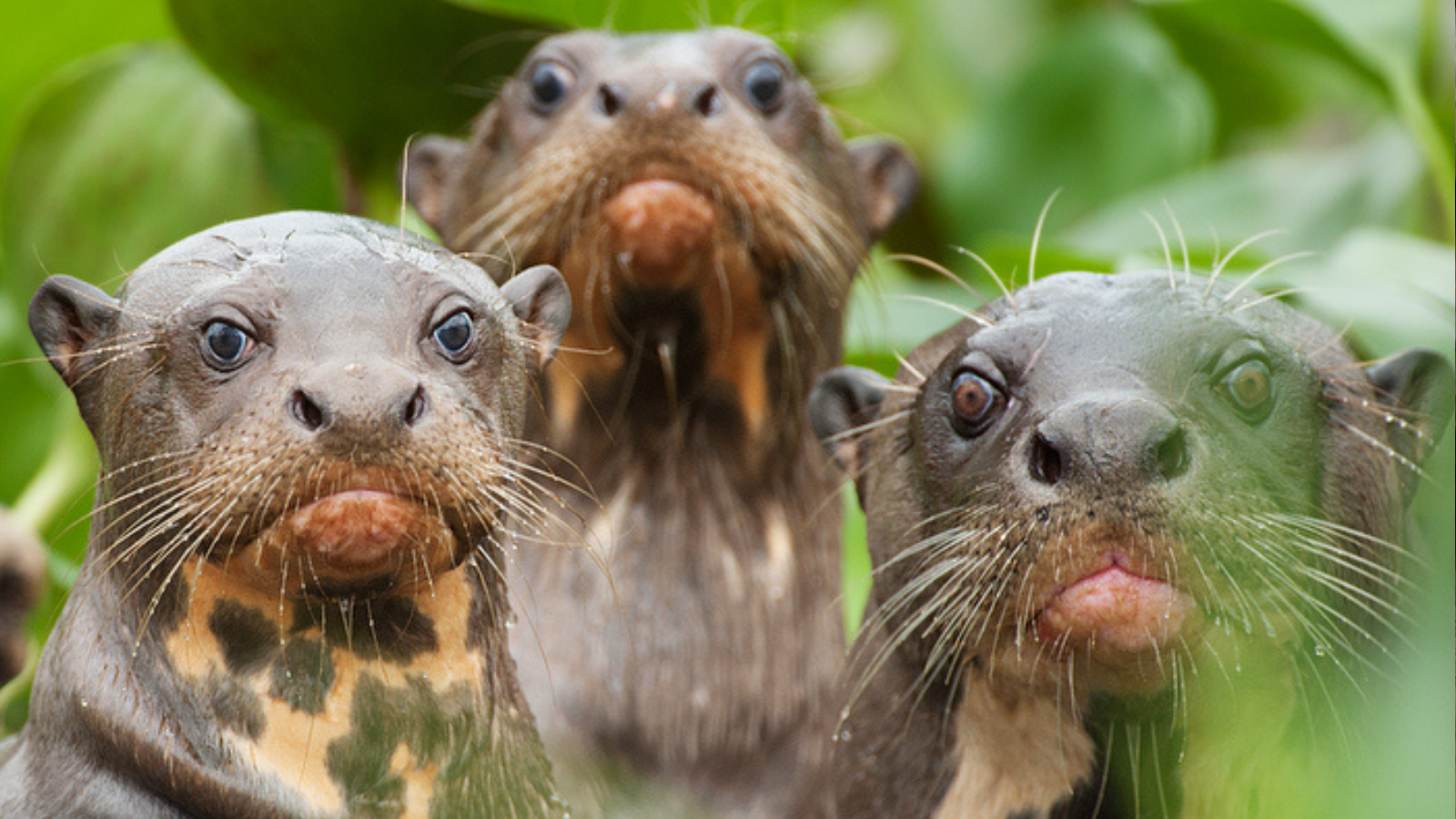
The giant otter, the largest otter species in the world, remains among the most threatened mammals in South America. Although it occurs in 10 countries, it faces a risk of extinction in all of them. In Brazil, the situation has worsened: in the latest update of the Red List, its status was upgraded from Vulnerable to Endangered.
Highly sensitive to human presence and river degradation, the species is now restricted to areas with clean water in the Pantanal and the Amazon, as well as small stretches of the Tocantins and Araguaia river basins. Projections indicate a population decline of 50% over the next 25 years, a trend that is expected to accelerate due to the climate crisis. Despite the severity of the situation, experts point out that the giant otter still receives limited attention in conservation policies.
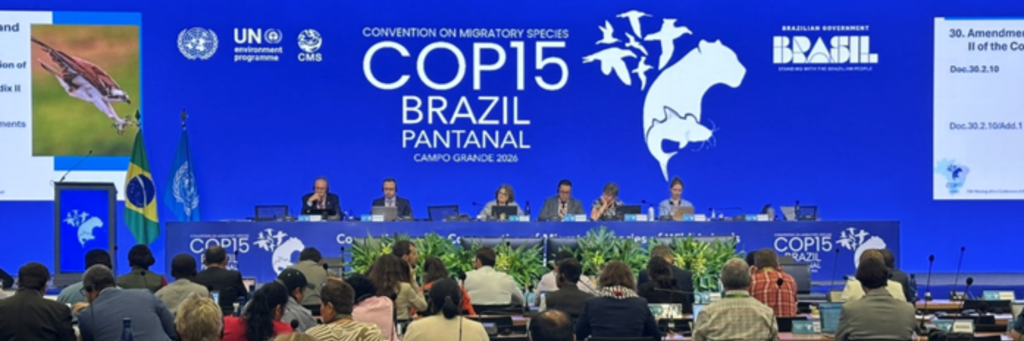
This week, during the 15th Conference of the Parties (COP15) of the Convention on Migratory Species (CMS), held in Campo Grande, the species was officially included in Appendices I and II of the international treaty – a strategic step forward to enhance cooperation among countries.
Caroline Leuchtenberger, president of Projeto Ariranhas and also Chair of the IUCN/SSC Otter Specialist Group, followed the negotiations before and during COP15. According to her, the inclusion of the giant otter in the CMS will strengthen joint initiatives to protect both the species and the ecosystems on which it depends. The next steps include the development of a joint conservation plan, as well as new international agreements aimed at strengthening the protection of the species and its habitats.