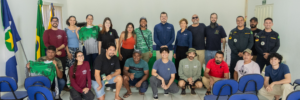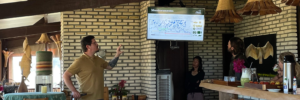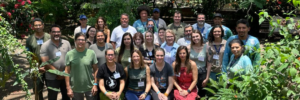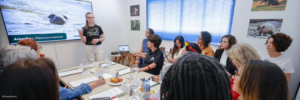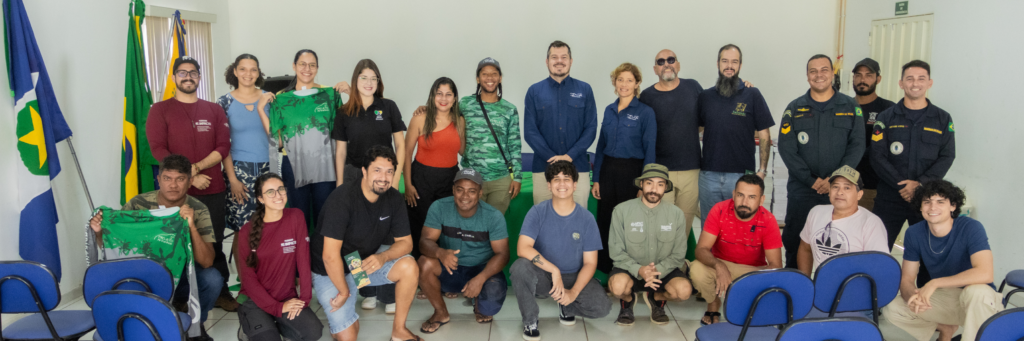
In February, Projeto Ariranhas participated in the “Workshop for Boat Drivers: Wildlife Observation, First Aid and English for Ecotourism”, held in Poconé (Mato Grosso, Brazil) at the Madalena Eubank Auditorium. The activity brought together 22 boat drivers, professionals who play a key role in nature tourism in the region.
Organized by Projeto Jaguar ID, the workshop included the participation of several conservation organizations working in the Porto Jofre region, as well as the Brazilian Navy. The initiative aimed to strengthen the training of boat drivers involved in local tourism, contributing to safer, more responsible practices aligned with biodiversity conservation.
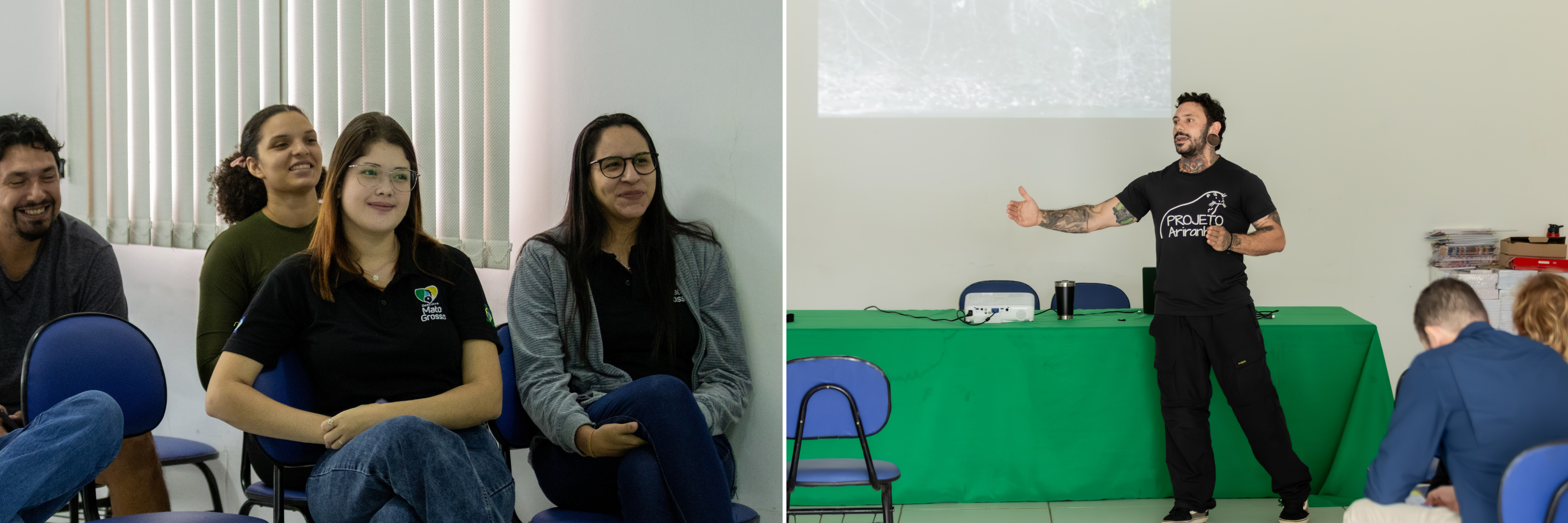
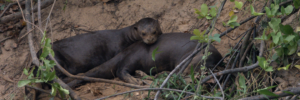
During the event, the Giant Otter Project team delivered a presentation on the biology, ecology, and behavior of the giant otter, highlighting its social organization and ecological role in the aquatic ecosystems of the Pantanal. The team also discussed best practices for wildlife observation, emphasizing the importance of respecting wildlife and promoting responsible tourism activities.
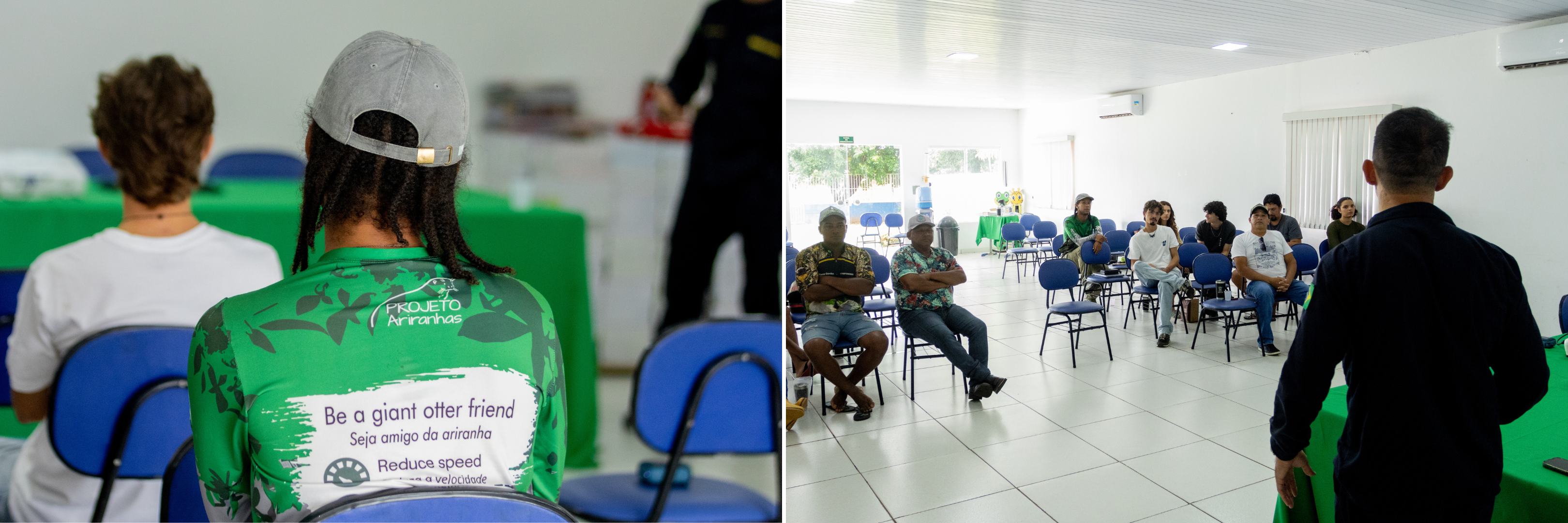
The workshop also highlighted the essential role of boat drivers in wildlife conservation. Because they spend their days navigating the rivers and interacting directly with tourists, these professionals strongly influence how wildlife is observed and respected.
In addition to the presentation on giant otters, participants also received first aid training provided by the Brazilian Navy and attended talks by other conservation organizations working in the region.
Best practices for observing giant otters
During the workshop, Giant Otter Project presented five guidelines for responsible giant otter observation, developed by the team to help reduce impacts on the species and ensure the safety of both people and wildlife:
- Maintain a safe distance, meaning a distance that does not alter the natural behavior of giant otters;
- Do not feed giant otters, as this interferes with their natural behavior, may transmit diseases, and increases the risk of accidents;
- Reduce boat speed, since strong waves created by fast boats can disorient and even drown pups;
- Avoid noise and do not use playback, as giant otters are vocal and territorial animals and may interpret artificial sounds as threats;
- Do not climbonto dens or latrine sites, as this may cause groups to abandon the area and can also lead to collapses or accidents.
Tourism and conservation working together
Training tourism professionals is an important strategy for promoting responsible wildlife observation practices. In the case of giant otters, a highly social species that is sensitive to disturbance, following these guidelines helps ensure that human presence on the rivers occurs in a respectful way that supports species conservation.
Giant Otter Project continues working to expand these initiatives and strengthen the harmonious relationship between tourism and biodiversity conservation in the Pantanal.