Start of 2025 Field Season with Team Training in the Pantanal
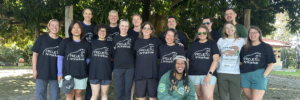
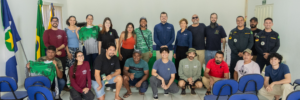
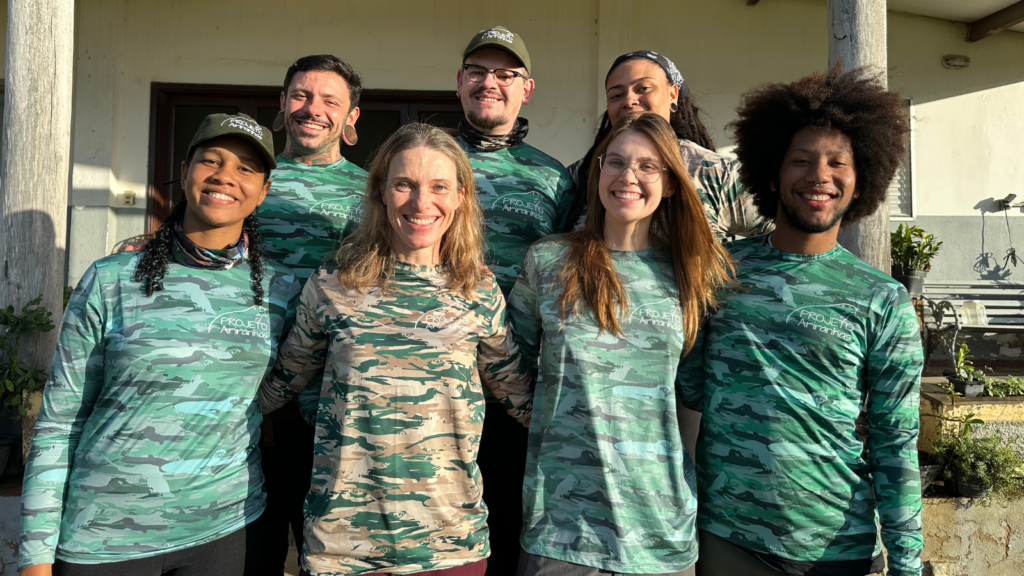
Our 2025 field activities began with a week-long training of our team in the Northern Pantanal, Porto Jofre region. This period was essential for aligning methodologies, strengthening teamwork, and planning actions that will guide the monitoring and conservation efforts of the species throughout the year.
During training, we conducted practical activities aimed at improving techniques for monitoring the species. The program included collection of biological samples – important for studies on diet, genetics, toxicology, parasitology, among others behavioral observations, audiovisual recordings, identification of used areas such as dens and latrines, and mapping the distribution of giant otter groups in the region. This standardization of procedures is crucial to ensure the quality of the data collected and to maximize the outcomes of the scientific research conducted by the project.
As part of our initiatives, we also carried out environmental awareness actions targeting local communities and tourists who visit Porto Jofre—a region of great ecological significance and touristic interest.
Visit from the IUCN: Strengthening Global Partnerships
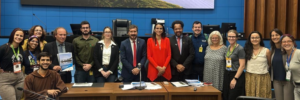
During the training period, we had the honor of hosting representatives of the IUCN Species Survival Commission (International Union for Conservation of Nature). The visit marked a milestone for the Giant Otter Project, reinforcing our collaboration with one of the world’s leading conservation networks.
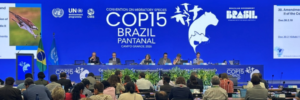
This encounter fostered a valuable exchange of knowledge and experiences, connecting local actions developed in the Pantanal to global strategies aimed at biodiversity protection.. It was a moment of dialogue and inspiration that highlights the importance of international partnerships in addressing conservation challenges.
Monitoring activities in the Porto Jofre Region
The Porto Jofre region has been one of our main areas of operation in the Pantanal since 2019. Over the past six years, we have monitored a total of 89 individual giant otters and recorded the birth of 48 cubs.
Long-term and continuous monitoring has been fundamental in expanding scientific knowledge about the species in its natural habitat and understanding how it is coping with climate change and other emerging threats These data contribute directly to the development of research and conservation strategies that consider not only the biology and behavior of giant otters, but also its interactions with the ecosystem and the human communities that share the same region.
More than just technical training, our week was an opportunity for team integration, strengthening collaborative efforts, and exchanging experiences among professionals working across different components of the project.
With the start of the 2025 field season,, we continue to strengthen our conservation efforts and enhance the positive impact of the Giant Otter Project. Each expedition represents a step forward in protecting the world’s largest otter and the aquatic environments it inhabits. The data collected throughout the year will be crucial for guiding effective conservation strategies and fostering more harmonious coexistence between the species, tourists, and local communities.